Moving Beyond “Cleaning” to Molecular Defense Against Gloeocapsa Magma, Moss, and Lichen
If your roof has dark streaks, green patches, or stubborn buildup, it’s not just dirt—it’s a living system actively breaking down your shingles. In Langley’s damp coastal climate—where frequent rain, overcast skies, and long moisture retention periods are the norm—biological growth like Gloeocapsa magma, moss, and lichen doesn’t just sit on your roof… it feeds on it.
Understanding this process is the first step toward protecting your roof at a deeper level—not just cleaning it, but defending it.
The Lifespan Dilemma: What Happened to 30-Year Shingles?
Asphalt shingles are still the most common roofing material across British Columbia because they’re affordable and widely available. But many homeowners are noticing something frustrating: roofs
aren’t lasting as long as they used to.
Where shingles once held up for 20–30 years, many now show significant wear much earlier. Climate conditions, installation quality, maintenance habits—and increasingly, biological weathering—are all part of the story.
The Realistic Lifespan of Asphalt Shingles
In today’s conditions, most asphalt roofs last somewhere between 15–30 years, depending on:
- Shingle quality and composition
- Installation standards
- Ventilation and attic conditions
- Local weather patterns in areas like Langley, where extended wet seasons and mild winters allow biological growth to thrive year-round
Even high-end shingles can deteriorate prematurely if exposed to constant moisture and organic growth.
What’s Accelerating Roof Deterioration?
Weather Exposure in the Fraser Valley
Langley’s weather plays a major role in roof wear. With high annual rainfall, persistent humidity, and relatively mild temperatures, roofs often stay damp longer than they would in drier regions. This prolonged moisture exposure weakens shingle structure, while temperature fluctuations still cause expansion and contraction that stresses materials over time.
Biological Growth (The Hidden Eater)
This is the factor most homeowners underestimate.
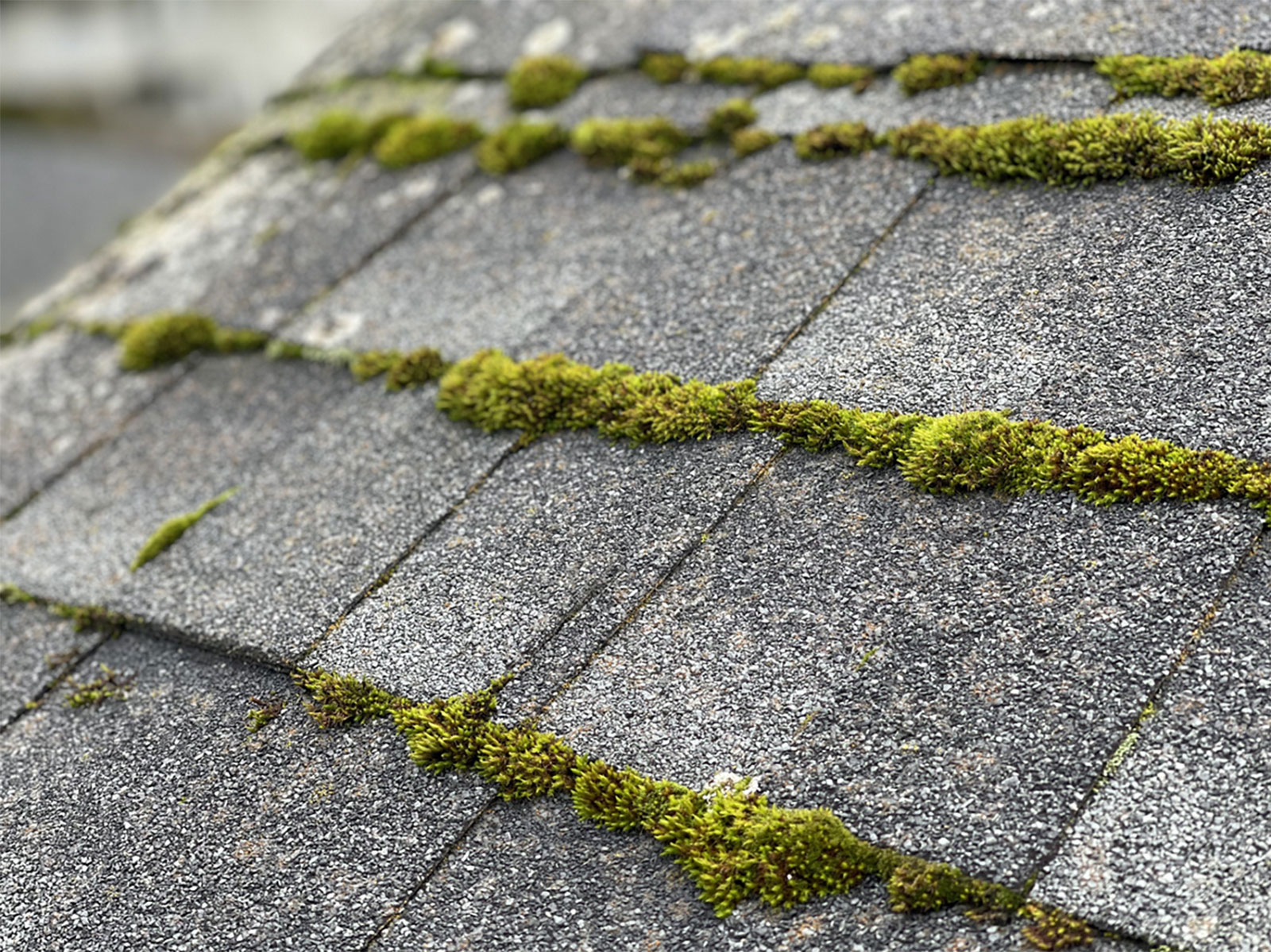
- Gloeocapsa magma (the black streaks) feeds on limestone filler in shingles
- Moss holds moisture against the surface, accelerating rot and granule loss
- Lichen forms root-like structures that penetrate and break down shingle layers This isn’t cosmetic—it’s active material degradation at a microscopic level. Installation Issues
Even small installation flaws—like improper nailing, poor sealing, or misalignment—can lead to water intrusion and early failure. Once moisture gets underneath, biological growth accelerates.
Neglected Maintenance
Debris buildup traps moisture and creates the perfect environment for growth. Clogged gutters worsen the problem by allowing water to back up along roof edges.
How to Extend the Life of Your Roof
Routine Inspections and Cleaning
Seasonal inspections help catch early signs of damage. Removing debris and treating biological growth prevents long-term deterioration.
But not all “cleaning” is equal—aggressive pressure washing can actually damage shingles and strip protective granules.
Upgrading Materials and Installation
Choosing higher-quality shingles and working with experienced installers makes a measurable difference in longevity, especially in wetter climates like Langley.
Moving Beyond Cleaning: Molecular-Level Protection
Traditional cleaning removes visible growth—but doesn’t stop it from coming back.
Modern treatment methods focus on disrupting biological regrowth at the molecular level, preventing organisms like Gloeocapsa magma and moss from re-establishing themselves. This approach offers longer-lasting protection and reduces repeated damage cycles.
This is where blue shingles roof rejuvenation becomes especially relevant. Rather than replacing aging shingles prematurely, rejuvenation treatments restore flexibility, improve water resistance, and help protect against future biological intrusion. This approach not only enhances appearance but actively extends roof lifespan—making it a practical solution for Langley homeowners dealing with persistent moisture and organic growth.
Conclusion: Your Roof Needs More Than a Surface Fix
Asphalt shingles can still be a reliable, cost-effective roofing solution—but only if they’re properly maintained and protected.
In regions like Langley, where weather conditions consistently support moisture retention and biological growth, homeowners need to think beyond simple cleaning. A proactive, science-based approach—including options like blue shingles roof rejuvenation—can significantly extend the life of your roof and protect your investment.
Another major factor is shingle quality from today’s manufacturers—but we’ll cover that in a future article!